The DMZ from Seoul
An hour north of Seoul, the world’s most fortified border runs through hills that have waited under an armistice since 1953. Civilians enter only on licensed tours, and the visit repays exactly the seriousness you bring to it.
The short version
- Civilian access runs through licensed operators only — booked ahead with passport information, confirmed against manifests at military checkpoints, and subject to closure without notice when conditions require; general visitor context at english.visitkorea.or.kr.
- The armistice of 1953 paused the Korean War without ending it; the Demilitarized Zone it created — four kilometers wide across the peninsula — remains the working reality the tours operate at the edge of.
- Imjingak park, outside the control line, is the freely accessible portion: the memorials, the Bridge of Freedom, and the ribbons left by separated families — reachable without a tour and moving without commentary.
- The Third Infiltration Tunnel, discovered in 1978, descends steeply under the border’s approach — hard hats, a real gradient down and back up, and dimensions that make the engineering’s purpose unmistakable.
- Dora Observatory looks across the zone into the North — Kaesong’s edges, the flagpole at Kijong-dong, and a landscape ordinary in every way except its meaning.
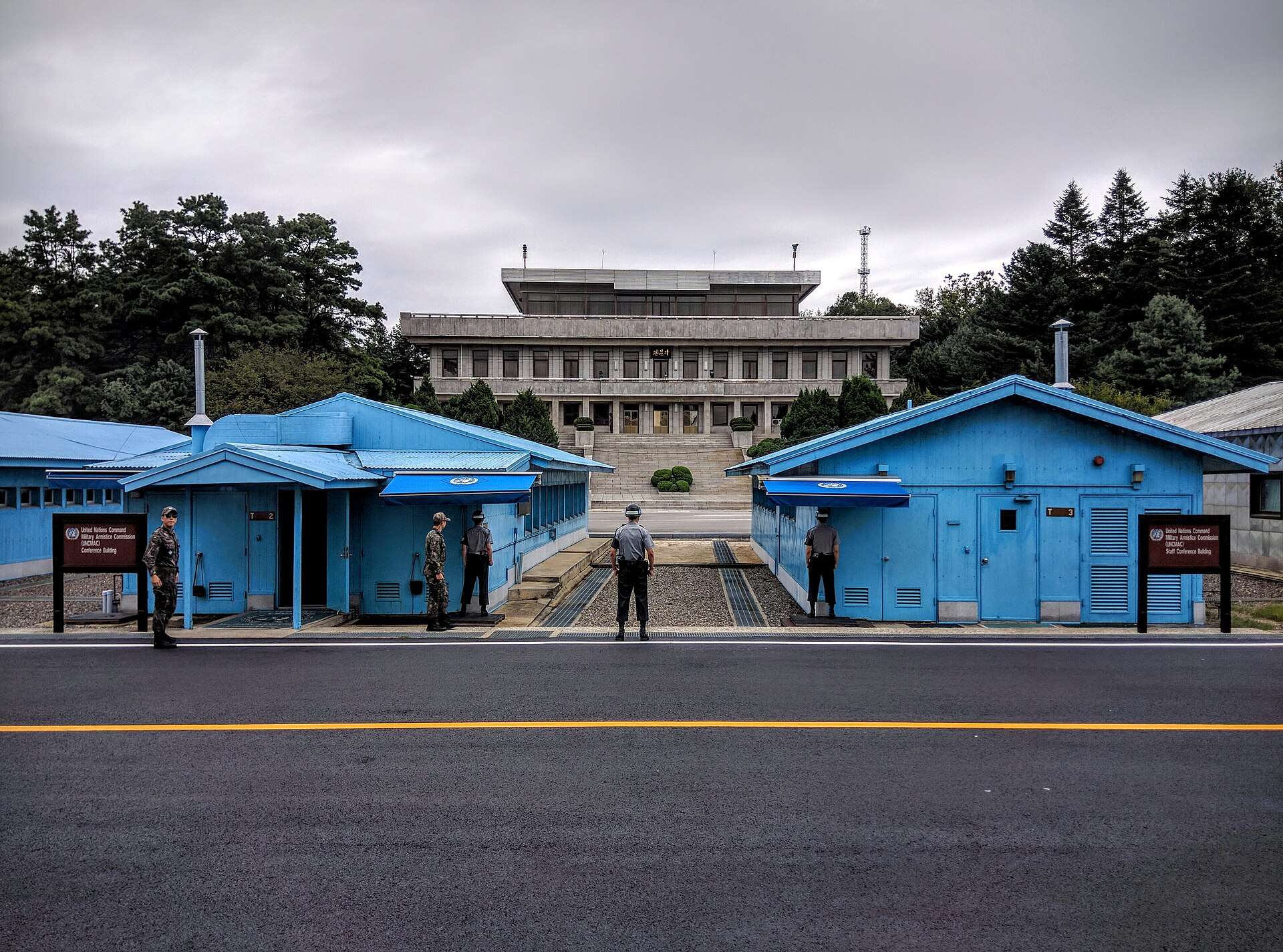
- The Joint Security Area at Panmunjom — the blue huts astride the line — operates on separate, stricter arrangements that suspend frequently; when available it books further ahead and enforces tighter rules.

Getting there
The tour bus is the only vehicle that matters: pickups run from central Seoul in the early morning, the highway north passes the river’s fence lines, and the civilian control checkpoint processes the manifest your passport details built. From there the day is escorted by design. Booking several days ahead is the working minimum; JSA-inclusive itineraries, when operating, want more lead time and stricter compliance. Imjingak alone — for those wanting the accessible fraction without the controlled zone — reaches by ordinary train and road.
The visit
The standard route runs Imjingak’s memorial ground, the tunnel descent — take the gradient seriously and the hard hat literally — the Dora Observatory’s long look north, and Dorasan Station, the railway platform built for a reunification that hasn’t arrived, its signage naming destinations trains don’t reach. Guides, many with family histories threaded through the subject, carry the material with a mix of precision and feeling that is itself part of the visit. Photography rules vary by point and are announced, not negotiated. The tours return to Seoul by mid-to-late afternoon; the day sits with most visitors longer than that.
Practical notes
Passport, per the alarm — the same one whose details you booked with. Dress within the operators’ stated codes; the guidance exists because the frontier photographs both ways. Weather operates normally but closures don’t announce themselves in advance — the zone’s schedule answers to events, and flexibility is part of the ticket’s fine print. Children are permitted on standard routes with age limits varying by operator. Treating the day as remembrance-adjacent rather than spectacle is both the right register and, practically, what the rules assume.
Frequently Asked Questions
Will I see North Korea?
From Dora Observatory, across the zone: yes — villages, the flag, the hills. It is a view of a landscape, not an event; the meaning is supplied by what you know, which is what the guides are for.
Why can’t I visit the JSA reliably?
Panmunjom access depends on inter-Korean and military conditions and suspends without public timelines. Operators sell it only when it’s running; the alarm’s don’t-promise-yourself rule reflects years of on-and-off reality.
Is the tunnel visit physically demanding?
The descent runs steep and the return climb steeper — a real effort in a low passage, with a monorail alternative at some periods. Anyone mobility-limited should ask operators about the day’s configuration before booking.
Is it appropriate to visit at all?
South Korea operates the tours as education and remembrance, and separated-family memorials anchor the route. Visited in that spirit — the alarm’s last line — it is among the more clarifying days travel offers.
Can I do it independently?
Only Imjingak. The controlled zone admits civilians solely under licensed escort — there is no independent version, and attempting improvisation near a military boundary is the one genuinely foolish move available.